
SITE SPECIFIC LOCATION RESEARCH
CANARY WHARF
I'm really interested in looking into Canary Wharf. It's an urban cityscape that is always adapting to fit the demographic that is accumulated there. The landscape however, is very boring and uniform, it definitely fits the theme of modern architecture, however I want to create a space that covers the neglected parts of the city that people may look over often. I want to create a building that will highlight the area alongside using the space effectively.
BLACKWALL YARD
BlackWall Yard is an abandoned dry dock at Canary Wharf, since I'm creating a structure that verticalness and is elevated off of the floor, I think it could be really cool to incorporate the untouched docks underneath and a social spot, maybe create seating or a bridge, something that will allow traffic flow within the area, whilst upholding a community onto of it.
MUDCHUTE FARM
Mudchute Farm is a very interesting location as it is a change of backdrop when considering the aesthetics of Canary Wharf, definitely something that is often played on, it sets itself apart from the hustle and bustle of the city and allows people to have community and social Time. A part of the country in the city. This is interesting as the use of space is alongside its surroundings makes me feel like this is a very good example of housing communities with social aspects. Canary Wharf has high rise living but it also has odd spots like these where people can take a break from the complex modernised spaces and enjoy community time and social interaction with nature.
SPATIAL EFFICIENCY
FLOATING UNIVERISTY
https://www.archdaily.com/901501/floating-university-berlin-raumlabor-berlin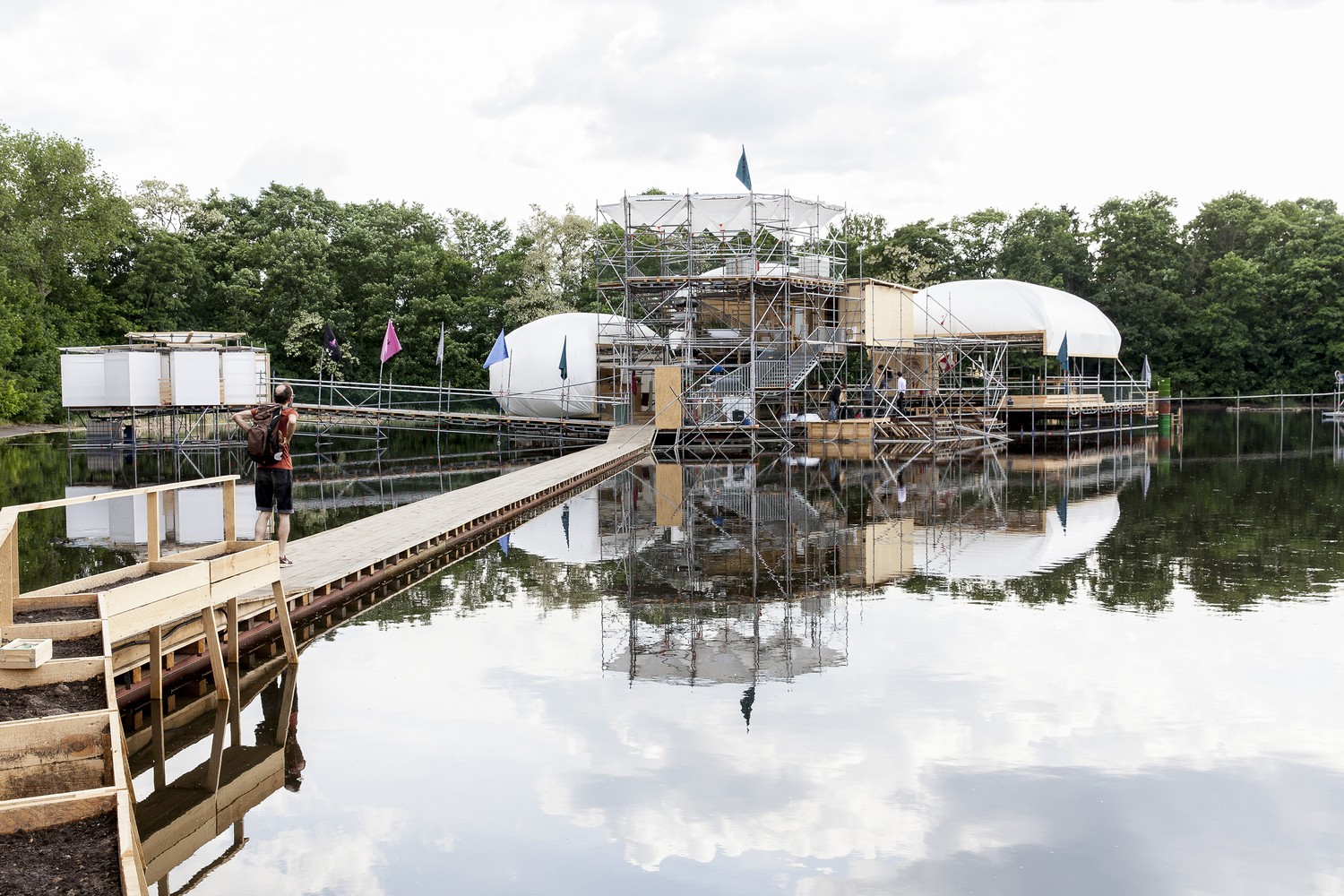
Very experimental and unique, materials chosen are also very basic reflecting the temporary nature of the building itself as its always changing and evolving and has room for more... room. Student and teacher joint effort, interesting as the space is intended for learning itself, what better way to learn architecture than to make a structure. I like the fact that its very industrialist and the building itself isn't square cut and boxy, the shapes really reflect the fluid nature of the water underneath the building.
STUDIO APTS
https://www.zanzihomes.com/blog/160/the-rise-of-studio
https://aspenwoolf.co.uk/why-invest-in-studios/
https://www.inspiredhomes.uk.com/insights/micro-apartment-growth/
This article is very important as it shows the current state of the economy and the struggles many young people are going through trying to afford living in the city. Studio Apartments are great at giving space and function at the same time, since everything is laid out in a single space, its much more accessible. They are also very popular making them good choices for struggling young people such as Gen Z's who aren't currently making a good enough income to afford proper apartments.
CARGO HOMES
https://www.loveproperty.com/gallerylist/87022/these-cheap-container-homes-cost-next-to-nothing
These cargo/container homes have been on the rise for the past few years as they are cheap, eco friendly and on par with the architectural trends of today, meeting the urgent needs to facilitate a new generation of home owners.
FLUX HAUS BY IAAC
Flux Haus from Kammil Carranza on Vimeo.
I have referenced Flux Haus many times because I think its revolutionary in its design, it helps fix housing crisis' whilst adapting to the socio-economic needs of the people, the pods themselves are very interesting as they are a room controlled by AI to fit the user requirements at a time, meaning the space could potentially adapt to any 'room' needed i.e. living space, bedroom, kitchen etc. Its really helpful to look at this because it has helped my understand how a single space can be multifunctional through the use of technology.
MATERIAL RESEARCH
POLLUTION ABSORBING BRICKS
 I
I
I am looking for sustainable solutions to ordinary building materials, these bricks intrigued me as they have a functional use other than to create structure, they are environmentally friendly and help keep an areas carbon footprint low
https://www.trendhunter.com/trends/brick-kilns

These bricks are made form leftover ash and waste, making them uniquely made and also very environmentally friendly.
TRANSLUCENT WOOD
https://www.archdaily.com/785482/translucent-wood-meet-the-new-material-developed-by-kth

In my research for glass alternatives, I've come across a very interesting substitute that is less costly and provides a much more unique experience. Translucent wood. The wood is much more stronger and lighter than frosted glass making it great for screening. It also gives an interesting alternative to privacy as the wood is not fully clear yet allows for light and shadow to be seen through.
Update:
Whilst exploring material concepts in my research, I came across translucent/transparent wood, this is wood that is genetically modified to be transparent, I think this is a great sustainable material substitute for glass and is much more aesthetically interesting. Glass is actually very unethically made and sourced so I wanted my building to be as sustainable and environmentally friendly as possible.
Not only it ethically made and sources, It is a great insulator and also a natural coolant, as seen above. This means that it will keep costs down for residents and will be beneficial in the long run as there won't be expensive heating and gas bills.
Transparent wood

https://algedra.ae/en/blog/transparent-wood-composite
The advantage of transparent wood over glass is that it has all the strength of opaque lumber–but still lets in light. This process could be used to create everything from transparent wood structures to load-bearing windows that never crack or shatter. Think of how this could be used to create entirely new types of sustainable solar panels, made-out of wood instead of chemically treated glass.
ICYNENE
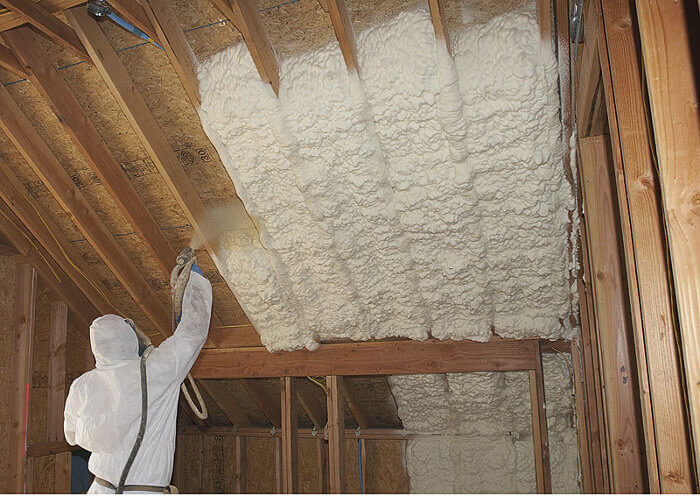
Icynene is a relatively new solution to ethical insulation. The foam expands up to 300x its size and creates an airtight seal that traps heat and allows for air filtration. It traps heat therefore allowing the customer to save up to 50% on their electricity bills.
Icynene is a great alternative to other plastic and non sustainable and environmentally friendly insulators. I would opt to use both the hard closed cell foam for flooring and external barriers and use the open cell foam for the interior walls as it is much more soft allowing the walls toe ability to breathe naturally. This will let airflow pass better through the pods
CONCRETE

Concrete is the most popular building material of the modern world, however there is a very big controversy on the ethics and sustainability of the material. Since it is pretty much a staple building material and is needed in the building process, I wanted to figure out if there is anyway that it can be made sustainable or if there are any developments towards a much better and environmentally-friendly material.
https://www.sustainableconcrete.org.uk
Georgopoulos, C. and Minson, A., n.d. Sustainable Concrete Solutions.
BAMBOO
I've spoken about bamboo in previous projects, its a material that has gained more popularity with the recent decades, bamboo is strong and durable and is a much more sustainable material in comparison to the likes of concrete.

Bamboo has a lifespan of minimum 25 years with structures being discovered that are over 100 years old. Bamboo is sustainable and is easily found, inmost cases its more durable than most building materials and if selected properly has a high strength to weight ratio useful for handing extreme weights and creating elevated latticed structures, making it perfect for thing such as cantilevers.
Bamboo is also one of the fastest growing plants on the planet, its a reason why it can be mass produced at such a fast rate. making it easily accessible and relatively cheap.
SKEPTICISM
Sustainable architecture is usually met with skepticism as there is always a an expiry date, however, if made with quality materials and cleverly made, sustainable materials can last the lengths of time that wood structures would.
https://ibuku.com/resources/faq/
https://en.wikipedia.org/wiki/Bamboo_construction
https://www.treehugger.com/green-architecture/bamboo-houses-stand-up-to-earthquakes.html
VERTICALIZATION
From Wikipedia, the free encyclopedia
In urbanism, verticalization is the rapid increase of inner city apartment high-rise buildings, resulting in the development of "vertical" city parts and urban densification.[1]
Although both verticalization and densification processes in cities can provide several advantages, such modifications in the urban landscape were implemented extremely fast, especially after the Second World War.[2]
In order to increase densities, urban housing policies encouraged new forms of vertical building.[3] The process of verticalization is also related to consumer culture and symbols of power.[4]
VERTICALIZATION
The idea of creating onto of something that already exists has intrigued me throughout this project as it then allows people to marvel at the continuous development of architecture/ spatial design within the area, whilst also repurposing a space. Not necessarily buildings but this video has made me more interested in stacking and how I can create 'mini' urbanised homes that solve need for space and efficiency whilst also accommodate social aspects that are normally found in traditional housing communities.
STUDENT ACCOMODATION
STUDENT ACCOMODATIONSURVEYS
Student Accommodation Survey: 1
Why did you pick Student Accommodation?
Student Accommodation is sensible and practical because it’s much easier to rent out. it helps that the university offers it as there are many spaces for likeminded people to connect. I’m also much closer to my university and able to access main spots such as other campuses for work purposes.
What are the pros of living in accommodation?
You live with people who are going through the same situations as you, there’s a sense of community and peace, it’s easier to relate to everyone. Going to an Arts university means that there’s a lot of spaces for making, which is important for me since I do Architecture, I need a lot of space for my models.
What would you like improved in your accommodation, so it suits your needs?
As much as I like that we have community spaces for everyone, it gets hard having to share spaces where, at a time, there could be up to 20 people in one room, it’s hard to have the space to think and breathe sometimes. So maybe more restrictions on people in communal spaces at a time.
Also the communal kitchens are a mess so it would be nice if we could have systems that allowed the kitchen to be monitored and cleaned i.e. rotations, allotted spaces for people to cook etc.
Student Accommodation Survey: 2
Why did you pick Student Accommodation?
It was easy to find since Im not from London, it made the most sense to me to be in accommodation. I honestly always wanted to live in accommodations since they were hyped up as easy living for students and accessible.
What are the pros of living in accommodation?
There are people everywhere at the accommodation so its easy not to feel lonely, I've made some good friends that really help me and I like my independent living away from home.
What would you like improved in your accommodation, so it suits your needs?
I would like a little more storage within my accommodation, as an art student, I need places to store my materials and tools. I need more storage without loosing space since accommodation is already small.
Student Accommodation Survey: 3
Why did you pick Student Accommodation?
I came from China so I didn't want to complicate my moving situation more, I decided that accommodation would be easy for me to live in.
What are the pros of living in accommodation?
I really like that there are so many diverse people on the site. It helps me be more creative when I see different types of people doing different art styles, it makes me more inspired. I also like that I can make many friends that are from different parts of the world, culture is so important and really influences the art you make so its always help to see different cultures and ethnicities.
What would you like improved in your accommodation, so it suits your needs?
I feel like I need more space... accommodation doesn't allow a lot of space per room so its easy to feel trapped sometimes. I also would like to have some outside space to myself like balcony, so I can have outside without having to share with everyone.
https://www.allsop.co.uk/media/evolution-student-accommodation-graduates-view/
Its so important to understand student accommodation as it is another perfect example of mini communities, like council housing, universities follow similar concepts with small housing units and lots of communal space to promote health and social interaction.
https://www.bbc.co.uk/news/magazine-21425200
The difference between accommodation history and present
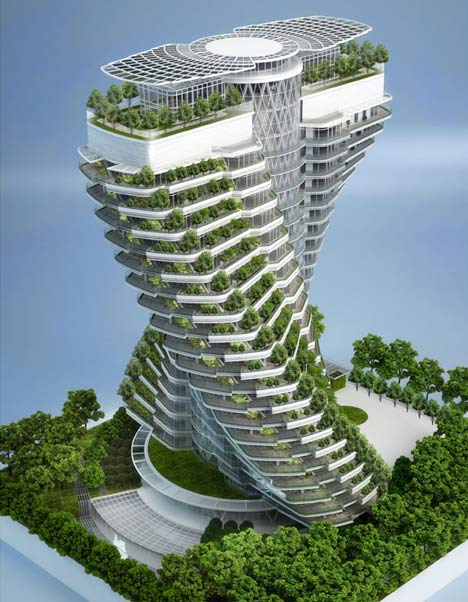
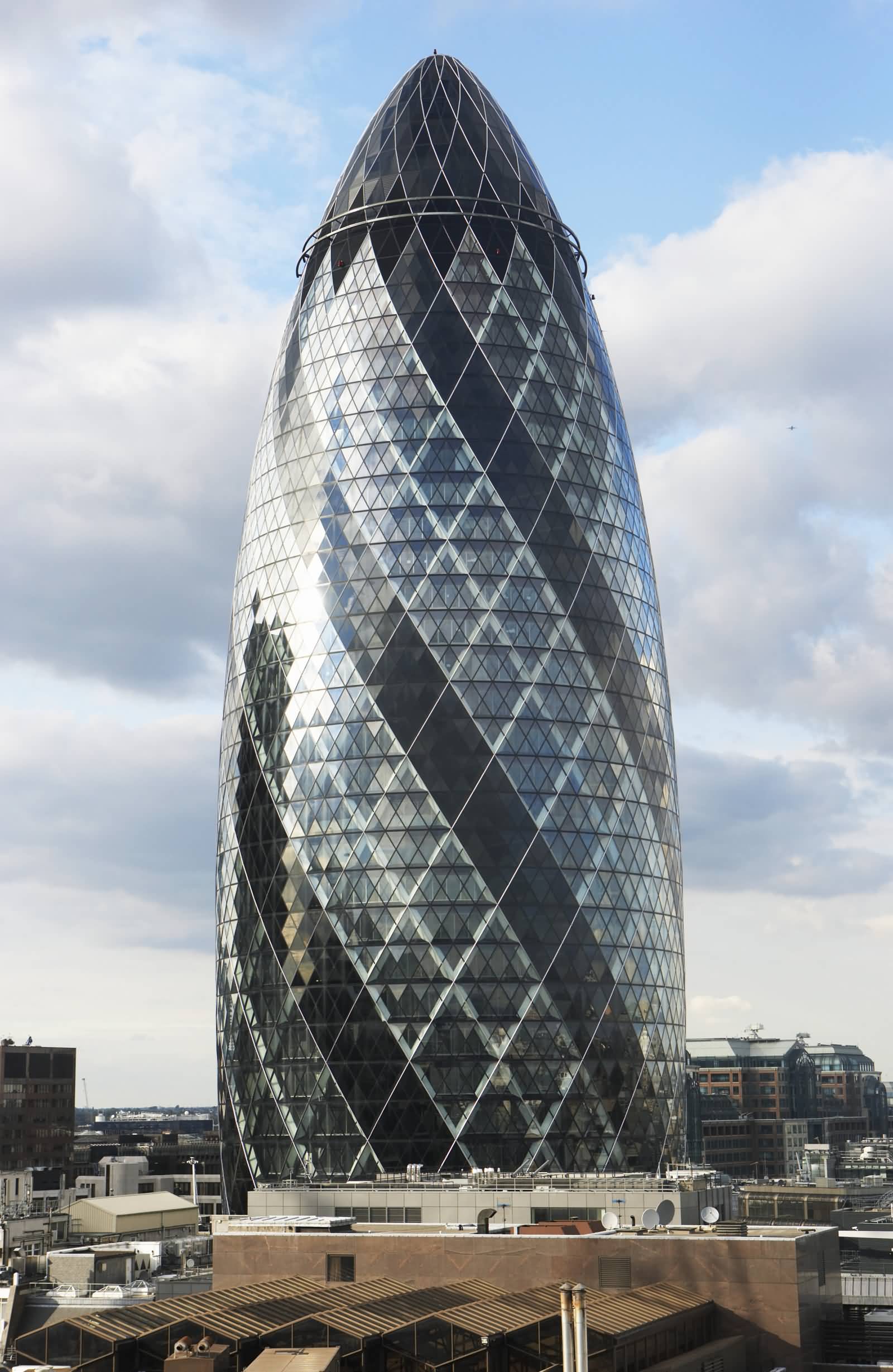
DNA INSPIRED BUILDINGS
Evolution Tower

Agora Garden
The Gherkin
MICRO APARTMENTS
CAGE HOUSING
MICRO APARTMENTS
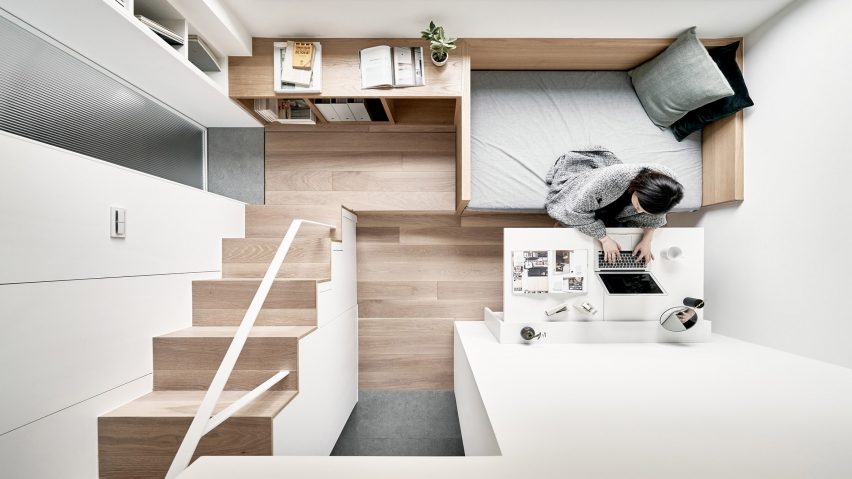
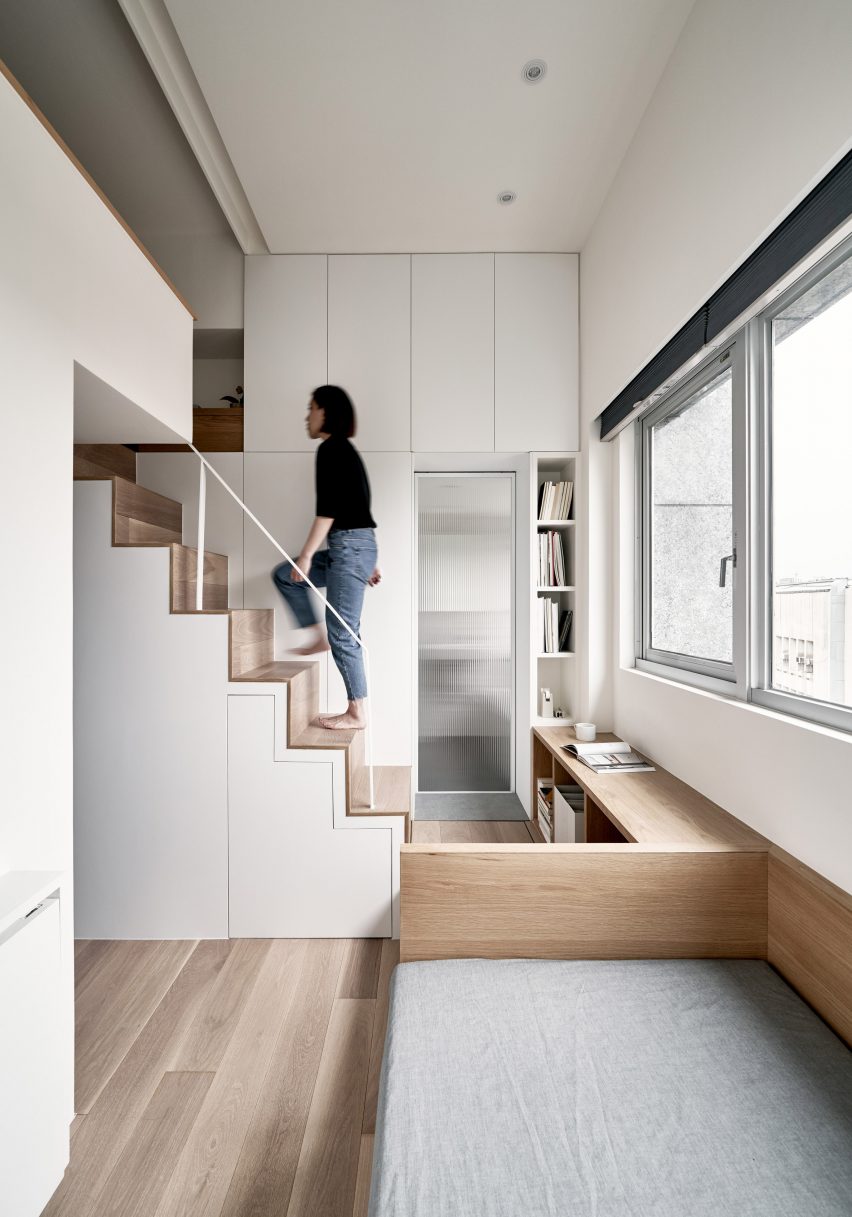
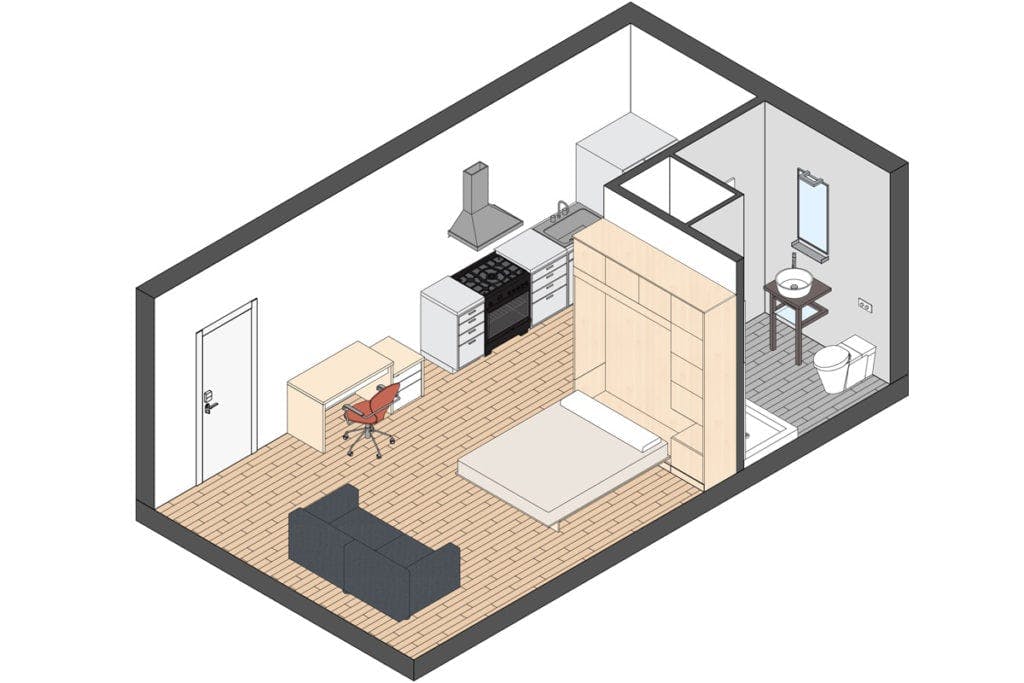
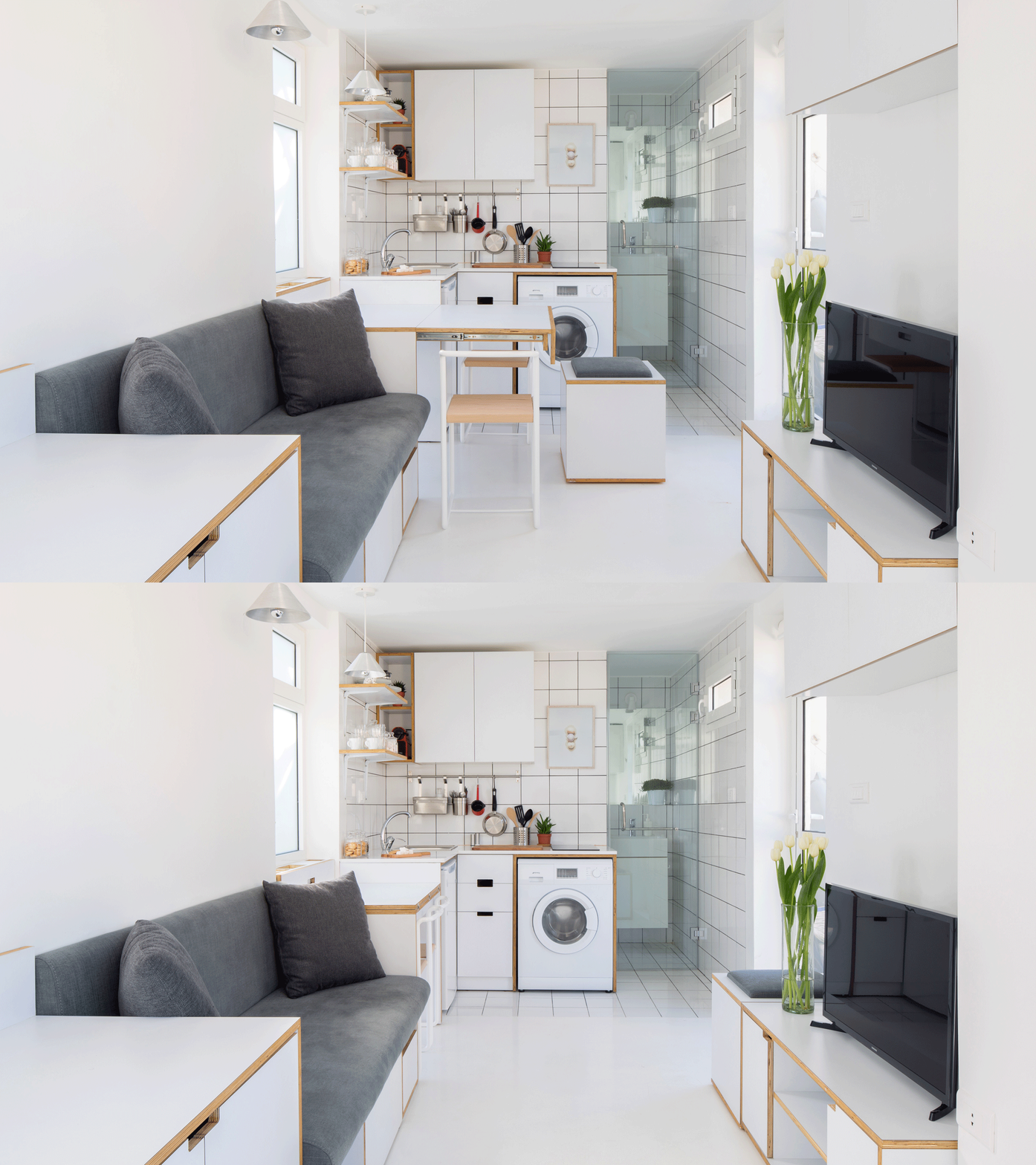
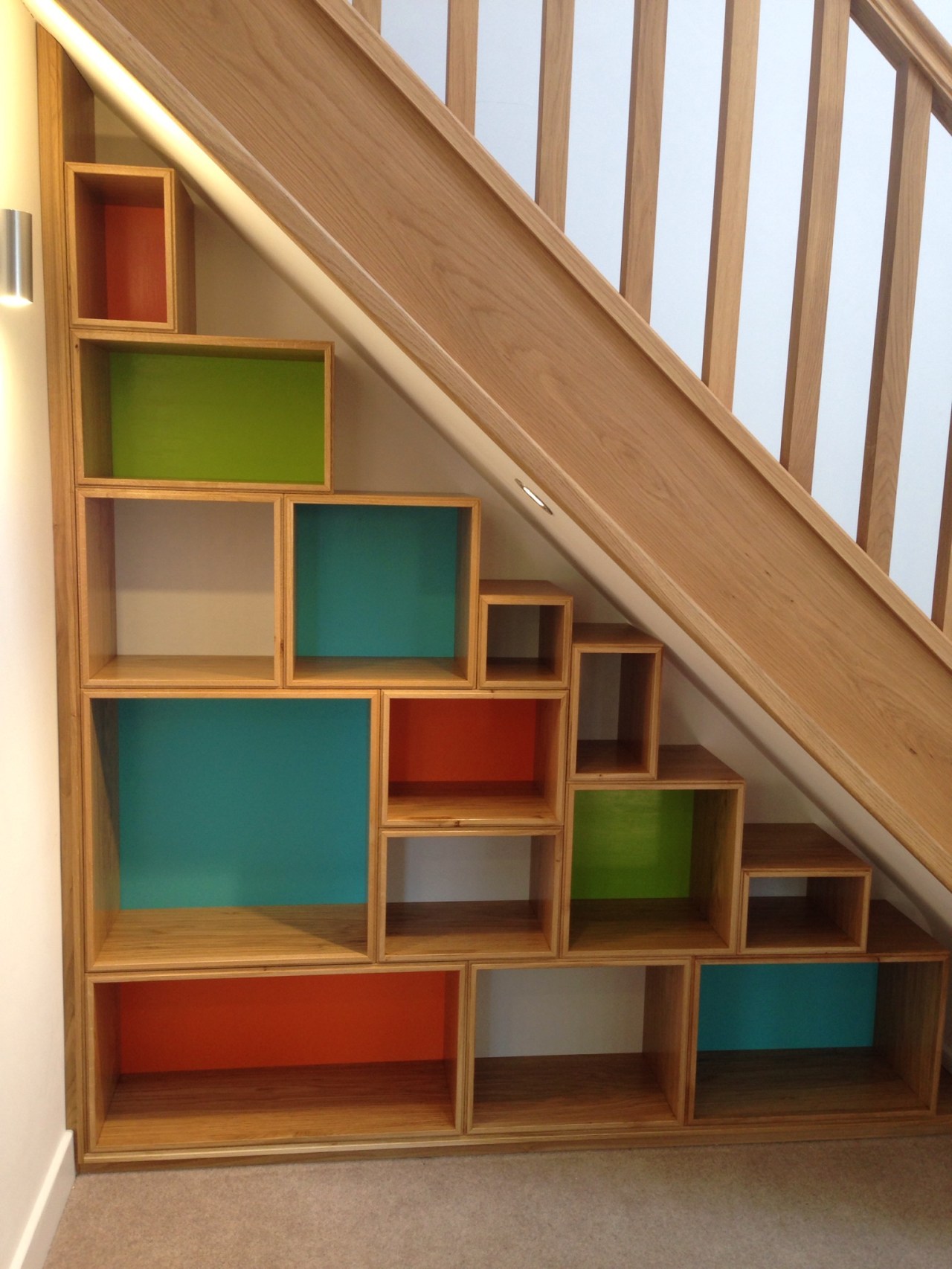
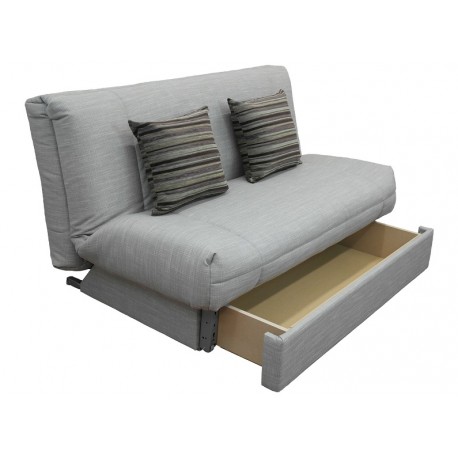
SMART STORAGE
ref: /Google Images

STUDENT ACCOMODATIONSURVEYS


SOCIAL HOUSING AND COMMUNITIES
COUNCIL HOUSING
This whole project has really been inspired by the idea of communities and socialist aspects of housing. Council blocks and allotments, although basic, have a great infrastructure and plot development. It allows individuals to rehabilitate themselves into communities of people that are in some what same positions as them. Hence the sense of creating community and security. Ofcourse, they aren't meant to be permanent home fixtures, more as steps to functioning society, there purpose and message is one that often over looked and I am really inspired by how they create mini communities using space efficiently and purposefully.
this video shows the affect of social housing within communities, especially within the elderly communities who experienced the effect of social housing the most
The vice article:
This article is very important as it shows the slow growth of the economy from War times and indicates that we have a commonwealth that are starting to ear stable incomes and be self sustained. Although Council Housing has developed differently over the eras, it's important to understand that its effect on communities plays a large part to its importance. Council Flats are often filled with ethnic diversity and all background types, meaning that families, couples and individuals all come together in a single block that belongs to them. There are many parallels to the types of housing accommodations that we now use even in the new age. Council Housing and Sky-Scrapers are not unlike each other. Alongside this, since the council housing often have outdoor spaces that belong to the property, it makes it easier for social interaction and healthy communications as there are much more opportunities for e.i. kids to play, people to walk around and people to have social gatherings. This article shows the unheard stories of people that live in these blocks, how important it is for them to have space they can call their own and it shows how much a community of people can be passionate about their lifestyles and living conditions. Council Housing is a solution unlike anything we have seen in architecture. It may not be aesthetic, but it filled demands and needs of the people it accommodates, making it a crucial piece of research for me.
FURTHER CONTEXT
https://en.wikipedia.org/wiki/Council_house
https://fet.uwe.ac.uk/conweb/house_ages/council_housing/print.htm
https://www.bbc.co.uk/news/uk-14380936
I did some further research on council buildings and the history and meaning behind them, this is all of the links of the articles I have touched on.
This project is so important because it re-invents the standards of social housing whilst keeping in mind the ethics and morals of what council housing is, it doesn't alienate the people that inhabit the housing from each other, instead creating modern spacing solutions and community spaces that are much more inviting and safe.
PERMA-CULTURE

Perma culture is a set of design principles that have a link to how m=nature and man can work in sync and harmony. The basic concept behind these principles is that mankind borrows its design directly from nature, that we use patterns and resilient features observed in nature to design our realities. Perma culture is important to my project as it shows that eco-friendly and sustainable part of my project. I want to create a lovable space that is in harmony with nature. In urban cityscapes, nature is far and few to see so innovating new ways of incorporating nature back into our buildings is always needed.
https://en.wikipedia.org/wiki/Permaculture
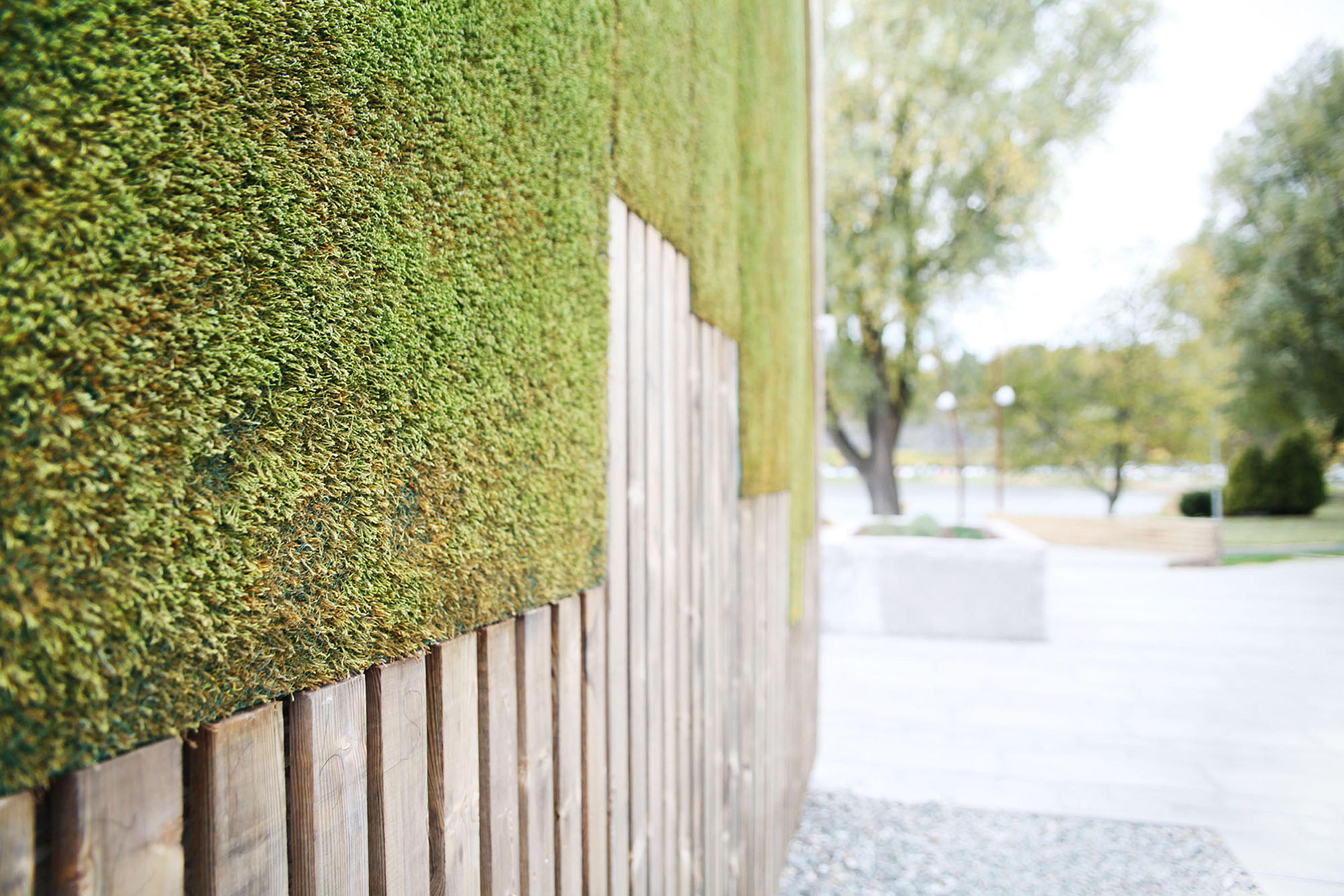
MOSS WALLS
MOSS WALLS
Moss walls are an amazing addition to urban cityscapes as they rapidly improve air quality and in places such as London, the air quality is dangerously poisonous. one in seven deaths are air related and most of them are directly related to the air quality. It also reduces carbon dioxide levels as the moss rapidly releases fresh oxygen.
https://www.evergreenwalls.com.au/blog/green-walls-2/10-scientific-benefits-moss-walls
https://oasisplants.co.uk/services/moss-walls/
CITY TREE
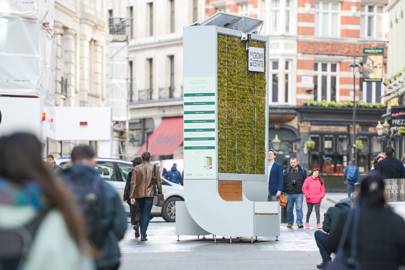
Olafur Eliasson - Moss Wall 1994

EXTERIOR MOSS WALL EXAMPLES
Ref: /Google Images


DIMENSIONS AND STATS
STUDENT ACCOMODATION STATS
Minimum room sizes for accommodation
- a) where all or some of the facilities are shared
| Number of persons | |||||
| Where the room is for the sole use of occupier(s) | 1 | 2 (cohabiting) | |||
| Bedroom | 6.5m2 | 9.5m2 | |||
| Kitchen | 4m2 | 5m2 | |||
| Combined kitchen and living room | 11m2 | 15m2 | |||
| Combined bedroom and kitchen | 11m2 | 15m2 | |||
| Combined bedroom and living room | 10m2 | 14m2 | |||
| Combined bedroom, living room & kitchen | 13m2 | 20.5m2 | |||
https://student-haus.com/news/room-size-requirements-in-student-hmo-accommodation/
Even smaller micro flats, of as little as 13 sq. m are offered for student accommodation, and as an affordable-rent solution for dense areas of cities such as central London
MICRO APARTMENTS SIZING
Micro apartments typically range from 400 square feet down to as little as 200 square feet in size (that’s between 37 and 19 metres square). They typically consist of just one room and usually include space for sleeping and sitting, together with a kitchenette, a bathroom and a limited amount of storage.
STUDIO SIZING
Studio apartment sizes vary considerably. In the United States, the average size is 500 to 600 sq ft (46-56 square meters)
https://en.wikipedia.org/wiki/Studio_apartment
According to London’s planning guidance, the minimum size recommended for a studio flat, is 37 sq. m.